Quickening the transition and building resilience with Long Duration Energy Storage


Quickening the transition and building resilience with Long Duration Energy Storage
Utilities and governments around the world continue to decarbonise their electricity grids, and their attention remains focused on the role and deployment of storage solutions. While solar and wind farms generate affordable and clean energy when the sun shines or the wind blows, quite often, energy consumption doesn’t line up to the time it is generated.
Energy storage, and specifically Long Duration Energy Storage, is proving to be an important piece of the puzzle in time-shifting capacity to hours when it's needed most, storing more energy and dispatching energy.
What is Long Duration Energy Storage?
While the definition of Long Duration Energy Storage, or LDES, varies depending on location; it’s commonly seen as energy storage, including batteries, that have the capacity to dispatch energy for six to eight hours or more.
The first generation of utility-scale battery projects currently in operation were deployed with a generation capacity of about one to two hours.
LDES brings a different form of energy security and reliability to energy grids. While shorter duration batteries continue to demonstrate their value in managing daily peaks and smoothing the intermittency of renewables, LDES delivers different value. The technology shifts solar from day to night, and steps in to store excess wind power that can’t pass through the network until the wind dies down. Longer storage also allows grid operators to extract more value from their existing infrastructure, taking some pressure off grids to build more transmission.
What is its current footprint and outlook for Long Duration Energy Storage?
LDES is taking centre stage in Australia, the UK, Italy and across the world as grids wean themselves off conventional generators towards net-zero systems. The Australian Energy Market Operator’s (AEMO’s) Draft 2026 Integrated System Plan notes that the number of major power stations in the Australian National Electricity Market (NEM) since 2010 has fallen from 26 to 15, with their capacity falling from 30 GW to 21 GW. Meanwhile, 6.6 GW of renewable generation and battery storage projects achieved full output in the two years to June 2025, which was double year-on-year.
Meanwhile, the LDES Council is pushing for a global target of 1.5 TW by 2030 as essential to support the deployment of renewables. While the LDES speaks for storage in the form of power, heat and cooling, Wood MacKenzie says when it comes to LDES power solutions, 2026 could prove to be a “turning point” for non-lithium batteries.
More is needed. AEMO’s lowest-cost scenario for the NEM requires 33 GW of LDES by 2050, the date for reaching Net Zero, with 27 GW needed by 2030. For the UK, Clean Power 2030 requires 4-6 GW by 2030 and 5-10 GW by 20235.While the IEA expects total global installed battery capacity to reach around 1,400 GW by 2035 on current policy settings, that figure needs to rise to 2,900 GW to meet Net Zero by 2050.
How is Eku Energy helping deliver LDES to the grid?
At Eku Energy, our mission is to accelerate the energy transition by delivering safe, secure and reliable energy storage assets that provide cost-effective clean energy.
We do this with utility-scale Battery Energy Storage Systems, also known as BESS. They are made up of enclosed battery units that are grouped together in a specific location. These batteries act like a power station, supplying electricity to the grid during times when the demand is high or when other sources of power generation become unavailable due to extreme weather conditions or supply disruptions.
Eku Energy is currently developing three LDES projects: the 100MW/800 MWh Griffith BESS in Yoogali, a suburb in Griffith, New South Wales in Australia, and two 240 MW, eight hour-plus assets in Southern England.
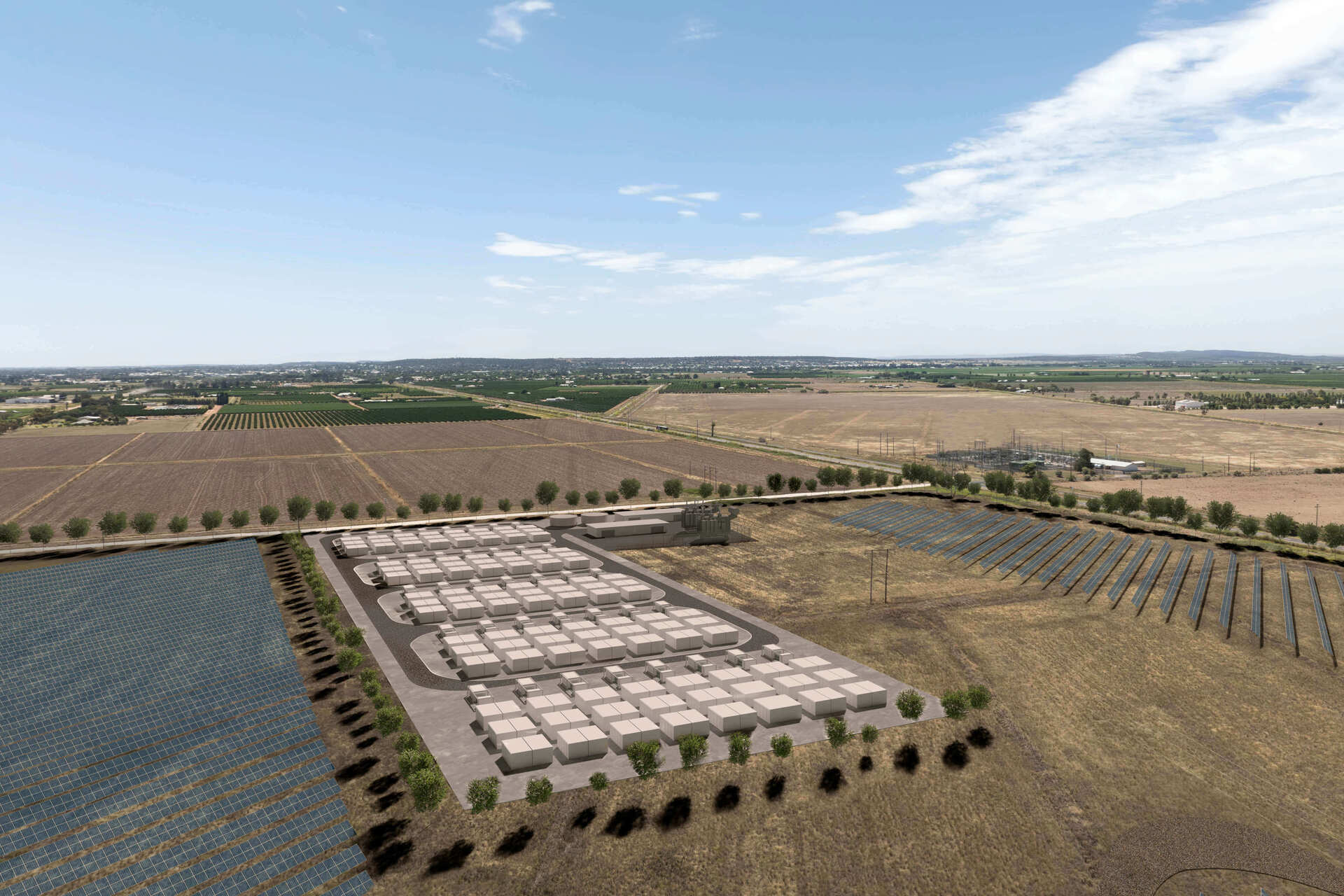
The Griffith BESS is anticipated to enter operations in 2028 after being awarded the LDES LTESA contract from the New South Wales government in 2025. Eku was successful in passing the eligibility assessment of the UK’s LDES Cap and Floor scheme for 3 projects, 2 of which have been progressed into the final stage and are awaiting notification of scheme winners in summer 2026. If successful, these projects would aim to come online by 2030 and be critical to delivering the UK Government’s Clean Power 2030 ambitions.
Although government contracts remain an important lever in commercializing large projects, breakthroughs in battery technologies and costs continue to improve the competitiveness of these solutions. As the Australian Energy Markets Operator AEMO notes, “the decline in battery costs is now making its mark”.
As the energy transition accelerates globally and more intra- and inter-day firming is required to secure grid reliability, projects like the Griffith BESS will become more commonplace. By anchoring the grid with reliable, multi-hour capacity, LDES ensures that the retirement of thermal power stations does not leave a gap in our energy security, but rather opens the door to a more resilient, low-cost, and clean energy future.